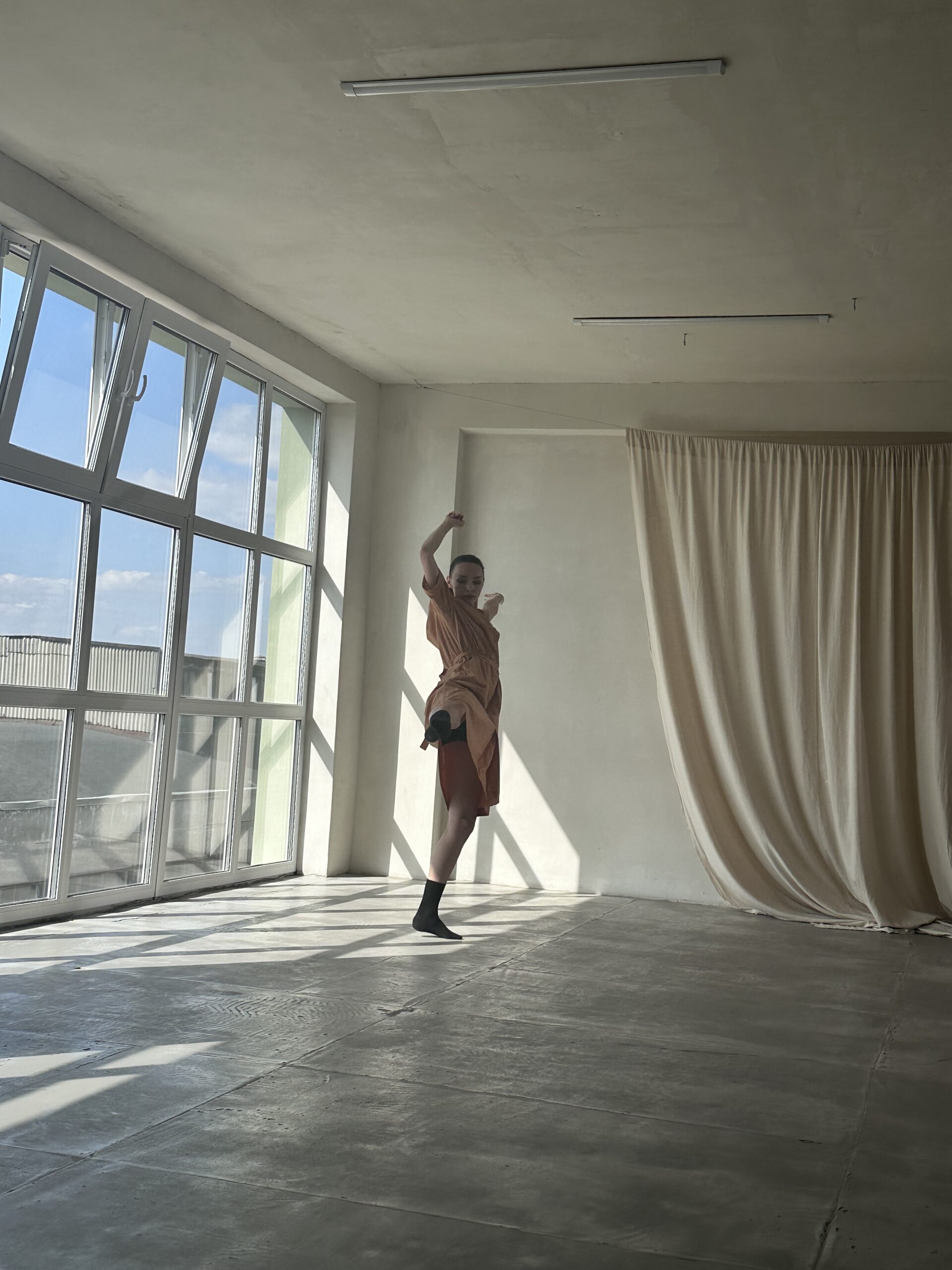
“I believe that the opposite of war
is not peace, it is creation.”
Sherry Reiter
What does it mean to remain human during a great war?
A psychologist is trying to catch an internet connection to study poetry therapy from a frontline city where she serves in the military. Because poems are written at the front too.
Another psychologist left the occupied, devastated Mariupol in March 2022, heading into the unknown, and found refuge abroad. Now she participates in workshops on poetry therapy because, once again, she writes poems and feels the healing effect.
A service woman who survived Russian captivity shares that she was able to endure only because of her love for her family. Now, between combat deployments, she joins poetry therapy workshops — because poetry gives her strength and inspiration.
Another psychologist works with veterans in a Ukrainian city that is shelled daily by the Russians: with aerial bombs, drones, missiles, and more. She hadn’t written poems before, but during the workshops, she discovered the transformative power of the creative process.
All of this experience comes from the project “Healing Words”, which I’ve been coordinating for a little over six months now. It’s a free training program in poetry therapy for Ukrainian psychologists, led by top facilitators of the method from the US, the UK, and other countries.
In 2022, when I started volunteering with the onset of Russia’s full-scale invasion of Ukraine, I saw a great need for psychological support for the military and their families. Many men took up arms for the first time in their lives, while women with children were left at home with sleepless nights and uncertainty about what would happen next. Over three years, the situation has changed: now every Ukrainian needs psychological help. So, if two years ago I volunteered exclusively with the military, veterans, and their families, now I also help those living in frontline cities, with internally displaced persons, and sometimes with teenagers. More and more often, I conduct workshops on poetry therapy for volunteers and psychologists because writing practices receive positive feedback.
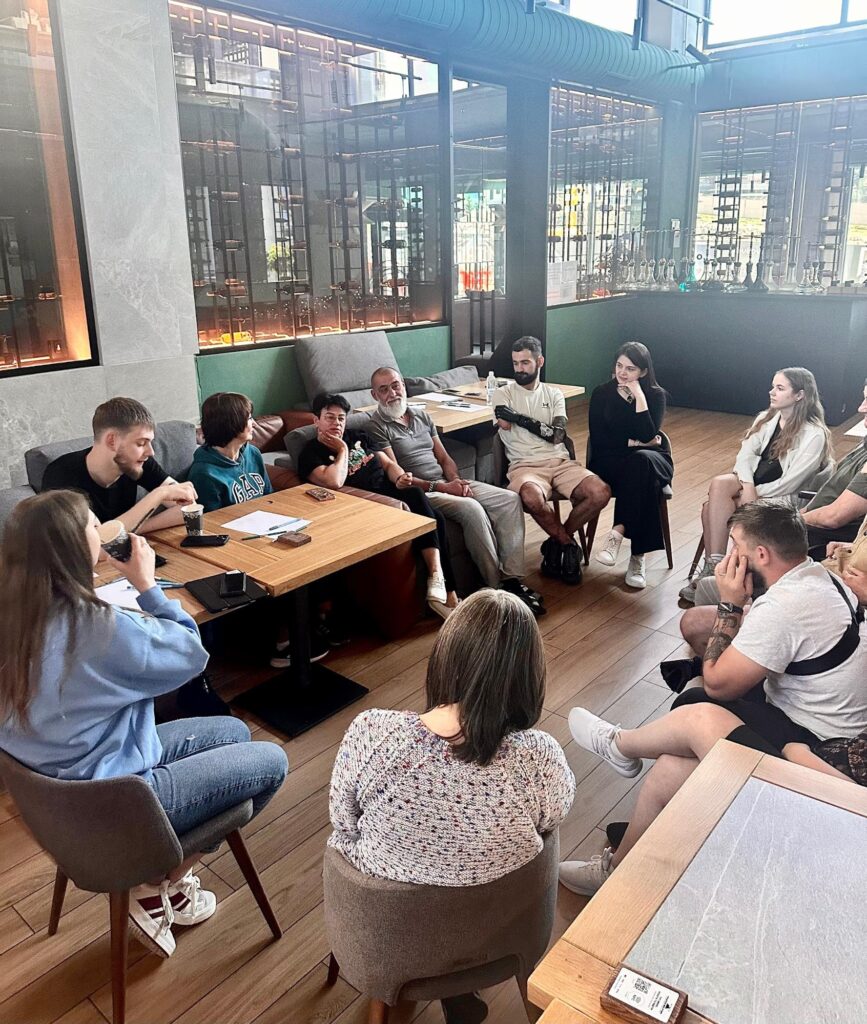
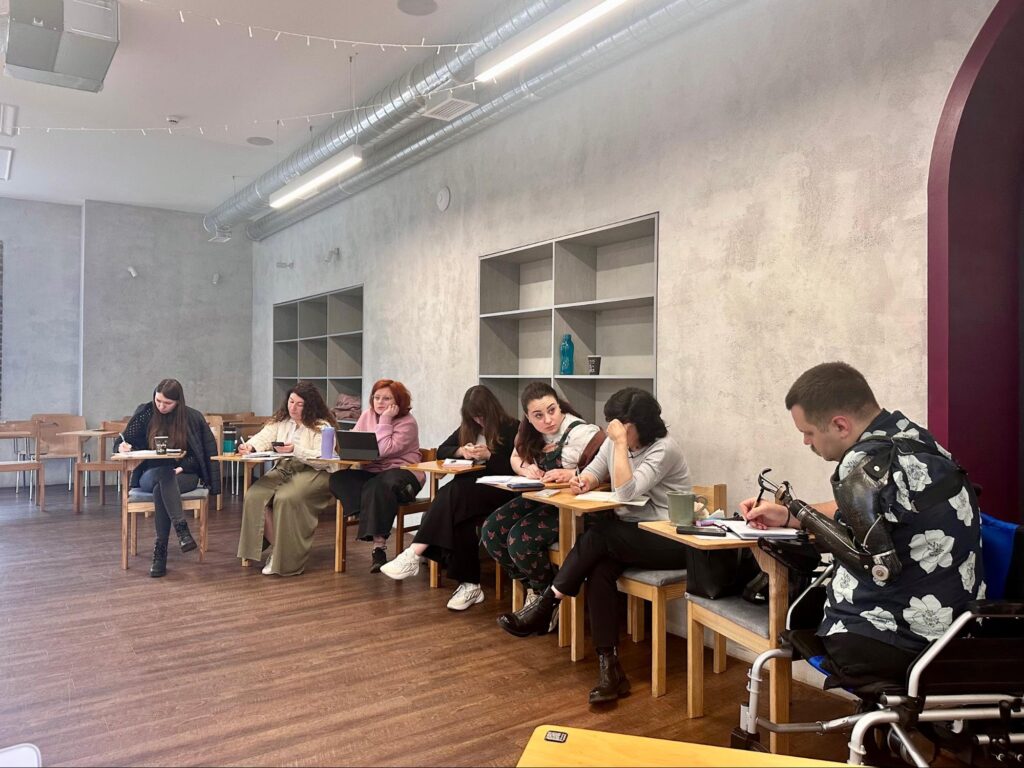
Photo: Anna Liudnova (from the poetry therapy workshops)
Additionally, workshops often include wives who have lost their husbands at the front and people who have left occupied cities, leaving everything behind and often knowing due to shelling that there is nowhere for them to return. War is about destruction, pain, and loss, about heroes who stand to defend the country. But no matter how much we heroize the soldiers with pathos, not everyone goes to the front out of a calling, patriotic feelings, etc. Sometimes it’s a choice without a choice: you have to defend your home. Issues of addiction are becoming more frequent. Therefore, in my work, I increasingly encounter alcohol addiction among both military personnel and civilians. Poetry therapy also shows its effectiveness in working with addiction. Of course, not everyone’s psyche is prepared for war. And really — can we ever truly be ready for it? Even as civilians, living under the constant threat of missile attacks 24/7.
The topic of mental health is gaining popularity in Ukraine: government programs, projects from the public sector, and, ultimately, influencers on social media are beginning to openly talk about taking antidepressants and the value of psychotherapy. However, alcohol is perceived by people as a ‘quick fix,’ a way to dull the pain and avoid delving deeper into their wounds.
It is often difficult to look into the eyes of a stranger, who is a psychologist, and talk about your life. I say that writing practices are one of the most delicate ways of healing because it’s not a case where the psychologist tries to ‘lead’ you; by taking the pen in your hand, you create space for acknowledgement. This sometimes means acknowledging your own weaknesses or mistakes, your Shadow, pain, or details of a traumatic experience. And it always leads to new insights. Moreover, you transfer all these experiences onto paper, as if separating them from yourself: this is me, and on the paper is my path. And what remains with each of us always? Our choice, because everyone has free will.
Yes, in the circumstances of war, it may seem cynical to talk about freedom. We truly did not consciously choose to live in these circumstances. But we can choose how to react to them. This is what I convey to almost every participant in my workshops or in individual therapy.
And returning to the topic of destruction. The words of Dr. Sherry Reiter resonated with me: “I believe that the opposite of war is not peace, it is creation.” I see this in practice. It’s one thing to read scientific articles about poetry therapy and trauma, and another to apply all the practices tested by experienced American mentors and writers to Ukrainian realities. I do this both as a practitioner and as a researcher. For my master’s thesis, I used diagnostic tools to determine levels of anxiety, PTSD, and depression, with 78 participants involved. All the results only prove the effectiveness of poetry therapy in working with these conditions. I have written several scientific articles and am currently working on an article about the impact of poetry therapy on social adaptation, using semi-structured interviews. Indeed, from self-destruction, people who have been somewhat broken by the trauma of war move to the process of creation, and this applies to all spheres of life.
At one point, I was coordinating a workshop led by Susan Furness, and she used a poem by Alice Walker, “How Poems Are Made / A Discredited View.” One line from it really stayed with me: “I know how poems are made.” I have been writing poetry since I was 7 years old, then it was essays, stories, fairy tales for children, and so on. But I didn’t give it much importance, and didn’t consider it a talent. I truly played the piano, danced, and wrote because it was what healed me. But now it’s different: I finally really know how poems are born. Because I accompany people who have experienced pain to heal through the creation of poetry and prose. I always say that my favorite thing is to see how their faces “light up,” literally bloom in the process of creation, and afterward, when quite often they are surprised by what they’ve written: “I didn’t know I could write.” We all can create if we follow our inner voice and trust the process. Poetry therapy is not about the final artistic product; it’s about process.
At different stages of my life, especially during difficult times or when I went through traumatic experiences, writing has always been my lifeline. That’s why I’ve always had an intuitive and unwavering sense that writing heals. Over the past two years, with formal training in psychology and while being in supervision and intervision, I’ve become even more convinced of this.
Over the past two years, receiving feedback from soldiers and their families, and hearing more and more stories from the frontlines firsthand, I felt a strong desire to gather these testimonies into one canvas. There are dozens of books being published with wartime accounts, so I began searching for alternative ways of expression. That’s how the idea for the performance “The Voice of Emotions in Motion” was born.
During the facilitation process, I was particularly drawn to one writing prompt: “Personification”, in which the participant portrays an emotion as a person. I often asked them to choose an emotion that was troubling or difficult to process in a healthy way. And, you know, in a workshop of 30 people, at least 5 would choose Anxiety. Others frequently chose Anger, Doubt, Pride or Arrogance, Aggression. Interestingly, Fear was rarely selected. Distrust came up more often.
So, for the performance, I chose the “most popular” emotions. And I want to clarify: I don’t approach this performance as a personal story or as an interpretation of participants’ texts through the lens of a director or playwright. The dance part is entirely the work of choreographer Mariia Hrokhola — I only helped guide small fragments, chose the music, locations, supported with costume decisions, and so on. Even with the music, we made choices collaboratively. This performance was created to resonate with many voices — the voices of Ukrainians and their lived experiences of war.
This is not about politics or direct depictions of frontline events. It’s about the emotional states that all people on this planet experience in one way or another — brought to life through music, dance, drawing, animation, and more.
An important element of the performance is a painting created by a beginning artist. I asked her to choose one emotion that’s been bothering her and depict it — with no restrictions on how or in what style. She chose Anxiety.
One of the performance’s core features is a large fabric canvas (about 2.5 by 3 meters) that has traveled with me to hospitals treating wounded soldiers, veteran spaces, art festivals, and various Ukrainian cities: Ternopil, Lviv, Kyiv, Zaporizhzhia… During my workshops, participants were invited to write a short reflection using the prompt: “Before the war I was… and now I am…” They also drew on the fabric. Later, illustrator Maryna Yazovytska helped finalize and design it.
One story that stayed with me came from a workshop at a hospital: a soldier in a wheelchair with a wounded leg wrote, “Before the war, I was. Now you’ll never get rid of me.” It gave me chills — such a powerful, life-affirming statement.
Many participants simply gave me the sheets they had written on — they’ve also become part of the performance. These are the varied voices of Ukrainians, echoing the pain and depth of one soldier’s words, who, while recovering in the hospital, told me about his mother waiting for him at home. He chose to personify the emotion Grief, and embodied it through the image of his mother: “Grief is the hope of returning home.”
Over the past 10 years, I’ve written extensively about performances and co-created poetic performances with fellow writers. But “The Voice of Emotions in Motion” became a new milestone for me — and, to be honest, a significant challenge. I’m drawn to the performative approach and the idea of preserving people’s voices — and when there’s an opportunity not to impose my own worldview or artistic vision, I try not to. But the greatest challenge was bringing together so many puzzle pieces from different art forms into one cohesive picture.
What does this art piece mean to me? Writing comes naturally and easily to me, and it wouldn’t have been surprising if I had simply started working on a new book filled with stories of soldiers and veterans. But I was trying to find an artistic “language” that would be felt and understood by people from all corners of the world. That’s why I chose to combine music, dance, the spoken word, and visual art. Some of us perceive the world more through sound, some through imagery — and I truly believe that everyone will be able to feel something of their own, to see something personal in it. Of course, that will always pass through the subjective lens of each individual. I believe that all the answers already live within us — and this performative format speaks to that.
Does every Ukrainian today experience emotions like Grief or Aggression from time to time? Pride and Doubt? Mistrust toward the world or people — or Anxiety? And ultimately, Love? Yes, this is an expressive testimony of the war in Ukraine, of our everyday life. And perhaps, in the end, it is not just grief or anxiety that defines us — but our capacity to transform them through love, art, and shared voice.”
Anna Liudnova